
What really happens in an elite runner’s everyday life on demanding training days? How does nutrition affect training quality – and when are double threshold sessions a useful tool?
We asked leading Finnish endurance runner Eemil Helander how he structures demanding training, uses sports nutrition products and looks after recovery. One clear message comes through in his answers: no single session decides the outcome – the whole picture does.
1. In what kinds of sessions does Eemil use sports nutrition products?
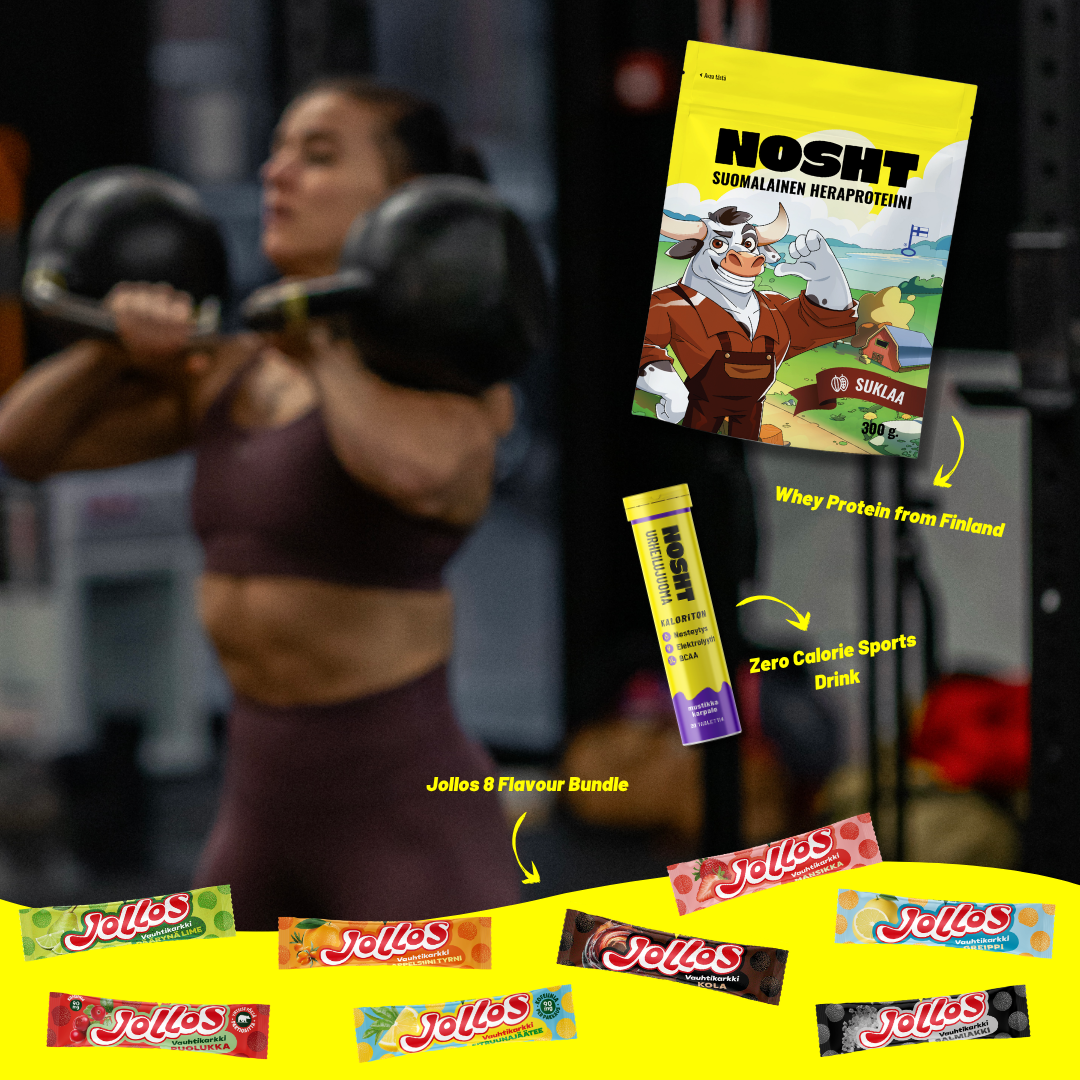
Helander uses Nosht and Jollos sports nutrition products above all when the training load is high.
“I mainly use sports nutrition products in demanding, long sessions, particularly on long runs and double threshold days. In those sessions, energy and fluid intake directly affect how the training goes and how well I recover.”
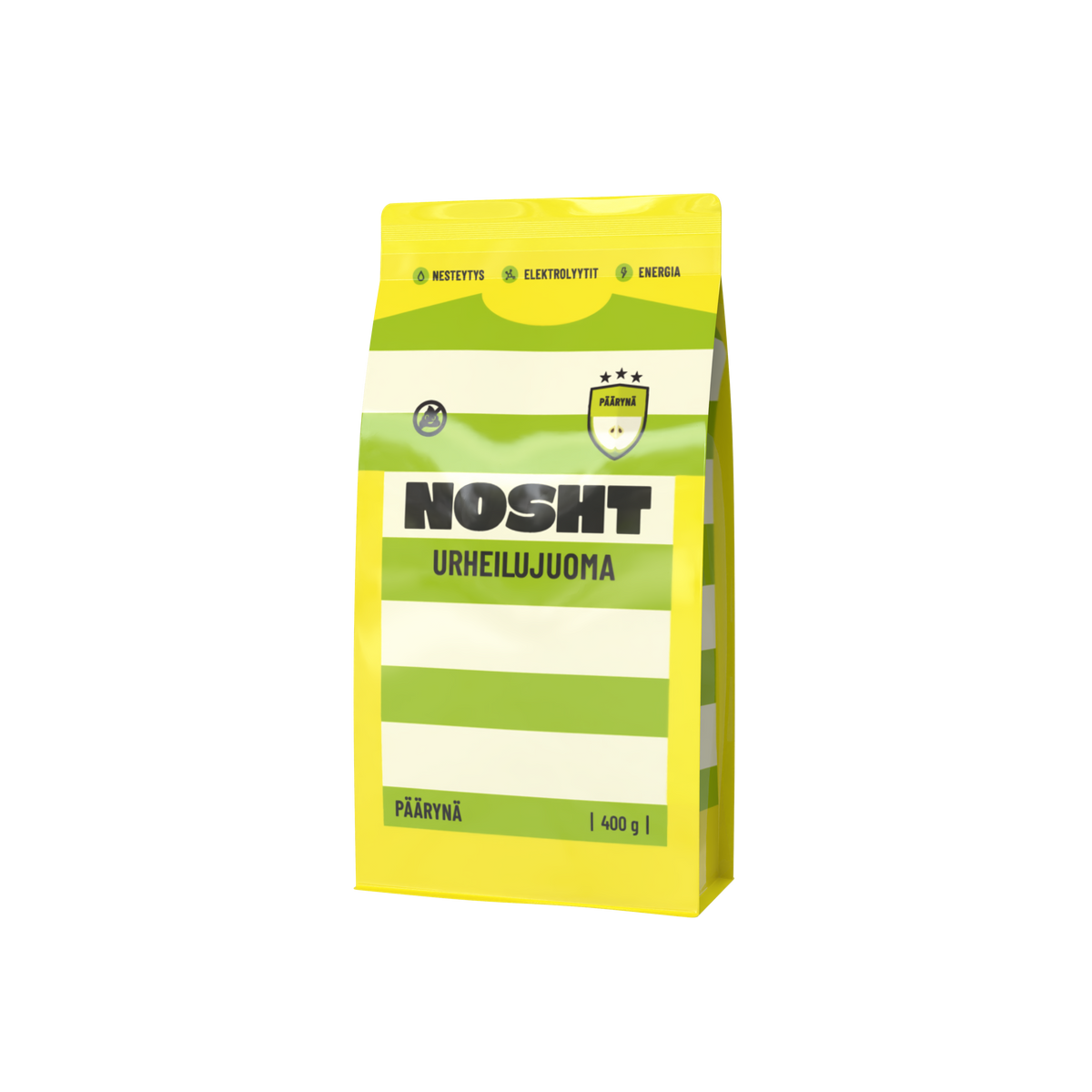
In practice, he often takes High-Energy Sports Drink in blueberry and lingonberry flavour and Sour Raspberry Jollos, which he uses before and during training to keep his energy levels steady.
He says that in easy aerobic endurance sessions, supplements are generally unnecessary when everyday nutrition is in good order.
2. How do you fuel a demanding training session properly?
Helander does not start a demanding workout with depleted energy stores.
Before training, he eats a carbohydrate-rich meal early enough to feel energised but light. During the session, he takes carbohydrates and fluids particularly if the workout lasts more than an hour.
After training, the focus shifts to recovery: the body quickly needs building blocks to repair the strain caused by exercise.
3. Does nutrition really make a difference to recovery?
According to Helander, it does – and you can feel it.
“I have noticed that getting enough carbohydrates and fluids during training and straight afterwards clearly speeds up recovery. My legs feel fresher the next day and the overall load is easier to manage, especially during demanding training periods.”
After a demanding session, recovery often starts with Strawberry Milkshake Palkkari, Helander’s own favourite for the moments after training.
4. What makes a training day ‘truly demanding’ in Eemil’s view?
One session alone does not define the day.
“A demanding training day is not just about a single tough workout – it is the whole picture that counts.”
A demanding day might mean two high-quality threshold sessions on the same day, for example, or one distinctly harder session performed close to maximum intensity. The load comes from the total strain of the day.
5. How does Eemil structure a demanding training day as a whole?
Helander sees a demanding day as a whole in which everything supports everything else:
-
high-quality training
-
adequate nutrition
-
hydration
-
sleep
After training, he focuses on energy intake, rests between sessions and goes to bed early in the evening. The following day is also deliberately easier and geared towards recovery.
6. Why does Eemil do double threshold days?
Double threshold sessions are part of Helander’s programme, particularly during demanding training periods in autumn, winter and spring.
“They are an effective way to develop threshold endurance, but they require a solid training background and careful load management.”
They are a carefully considered tool rather than a routine.
7. How do the morning and afternoon sessions differ on a double-session day?
The sessions on a double threshold day have clearly distinct roles.
The morning session is slightly easier, in the lower threshold (VK1) zone. A typical session might include 2 km intervals, with lactate kept below 2 mmol/l.
The afternoon session is faster, but still controlled. It might consist of 1 km or 400-metre repetitions, for example, still below the anaerobic threshold.
8. How important is nutrition between sessions?
Helander’s answer is direct: crucial.
“Without enough nutrition and hydration, the second session suffers, and you notice it immediately in how you feel.”
The time between sessions is not just rest, but active recovery in which nutrition plays the leading role.
9. Who are double threshold days unsuitable for?
Demanding double sessions are not the right solution for everyone.
“They are not suitable for beginners or runners whose aerobic endurance and ability to recover from training are not yet at a sufficient level.”
A demanding everyday schedule and insufficient sleep also make double threshold days risky.
10. What are the most common mistakes in demanding training?
Helander sees the same pattern repeated among many recreational runners.
“People underestimate the importance of nutrition and hydration: they do a demanding workout, but do not eat or drink enough before or after it.”
Another common mistake is doing too many demanding sessions without adequate recovery.